

How to Choose The Perfect Bathroom Vanity
10 Mistakes to Avoid
Choosing the right bathroom vanity can completely transform the look and functionality of your bathroom. A vanity isn’t just a sink cabinet-it provides storage, countertop space, and often becomes the visual centerpiece of the entire bathroom. However, many homeowners make costly mistakes when selecting a vanity. Choosing the wrong size, material, or sink configuration can lead to installation issues, reduced storage, and an uncomfortable layout.
In this guide, we’ll walk you through how to choose the perfect bathroom vanity step by step, including:
- Selecting the right vanity size
- Deciding between single and double sinks
- Choosing the best mounting type
- Comparing vanity materials and durability
- Selecting the right style for your bathroom
Avoiding the most common vanity buying mistakes.
Whether you're remodeling a master bathroom or updating a small powder room, this guide will help you make the right decision.
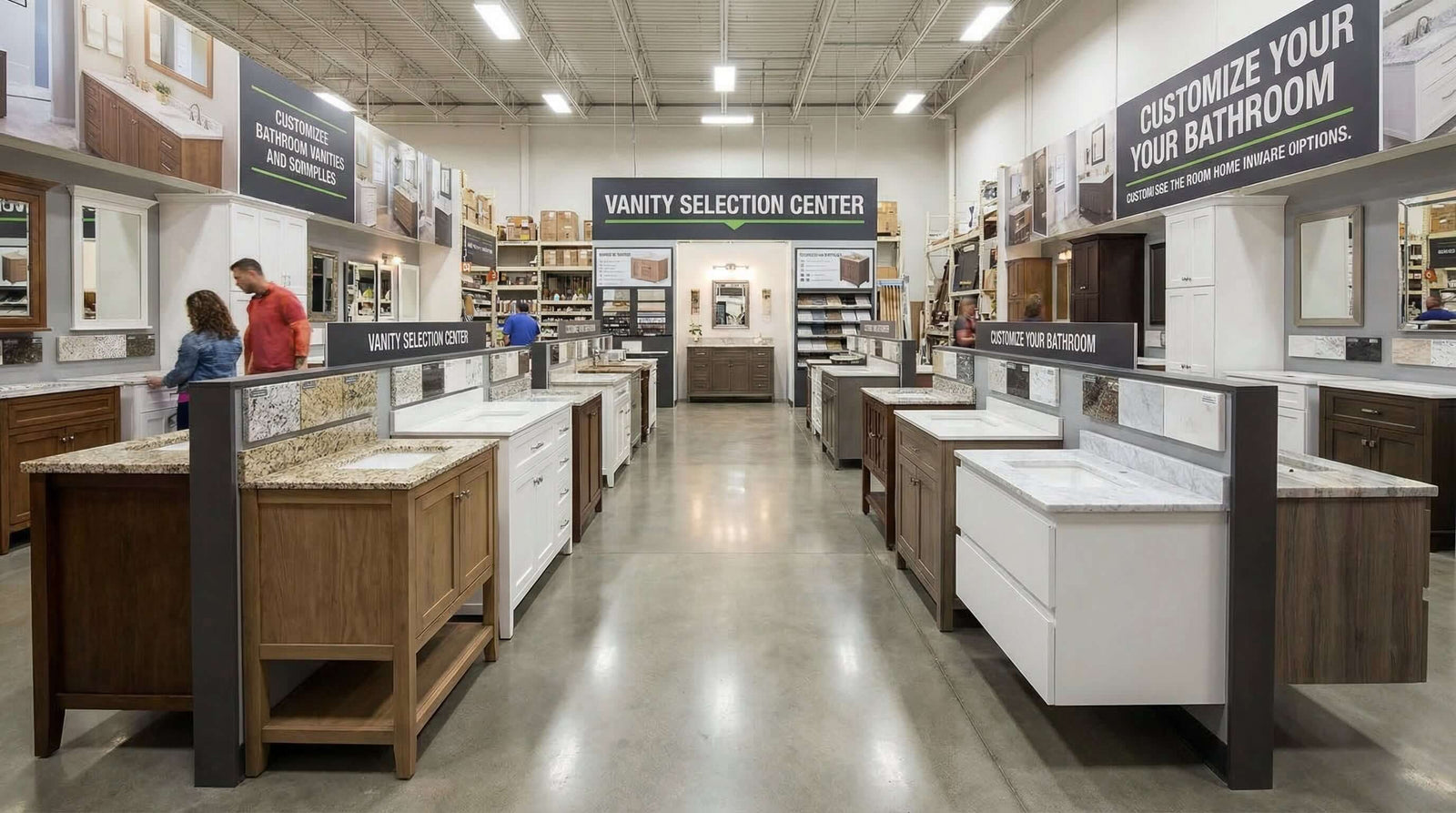
Step 1: Choose the Right Vanity Size
The first and most important step when choosing a vanity is determining the correct size. Bathroom vanities come in standard widths ranging from 24 inches to 72 inches.
| Vanity Width | Best For |
|---|---|
| 18-24 inches | Powder rooms |
| 30 inches | Small bathrooms |
| 36 inches | Guest bathrooms |
| 48 inches | Medium bathrooms |
| 60 inches | Double sink vanities |
| 72 inches | Large master bathroom |
Before purchasing a vanity, measure the available wall space and make sure there is enough clearance for doors, drawers, and walking space.
Tip: Leave at least 30 inches of walking space in front of the vanity for comfortable use.
Step 2: Choose Single vs Double Sink
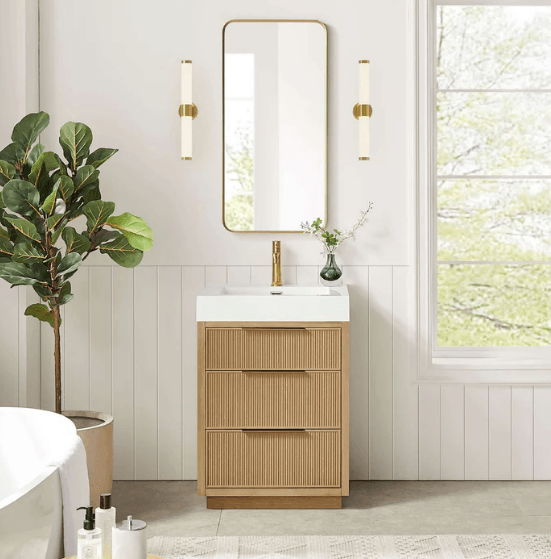
One of the biggest decisions when selecting a vanity is choosing between a single sink and a double sink.
Single Sink Vanities:
Best for:
- small bathrooms
- powder rooms
- guest bathrooms
Advantages:
- lower plumbing cost
- more counter space on smaller vanities
- easier installation
Double Sink Vanities:
Best for:
- master bathrooms
- shared bathrooms
- couples or families
Advantages:
- two people can use the vanity simultaneously
- increased storage
- higher resale appeal
Most double sink vanities start at 60 inches wide
Step 3: Choose a Vanity Mounting Style
Vanities come in several mounting styles, each offering different design and functionality benefits.
| Mounting Type | Description | Best For |
|---|---|---|
| Freestanding | Traditional cabinet-style vanity | Most Bathrooms |
| Floating | Wall-mounted vanity | Modern and small bathrooms |
| Corner | Fits into bathroom corners | Very small bathrooms |
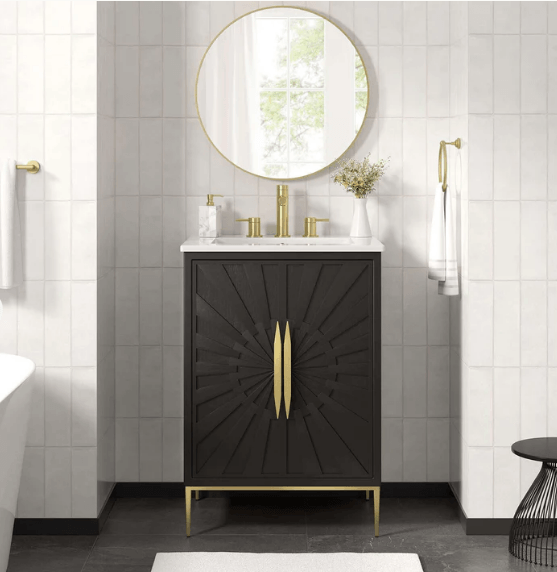
Freestanding vanities are the most common type. They sit directly on the floor and offer plenty of storage.
Advantages:
- easy installation
- large storage capacity
- works in most bathroom layouts
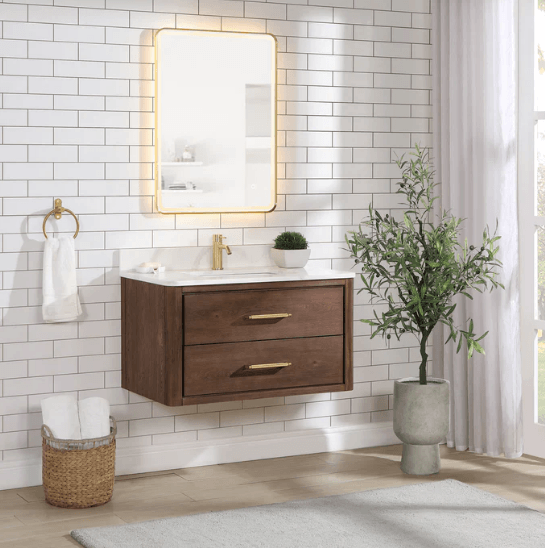
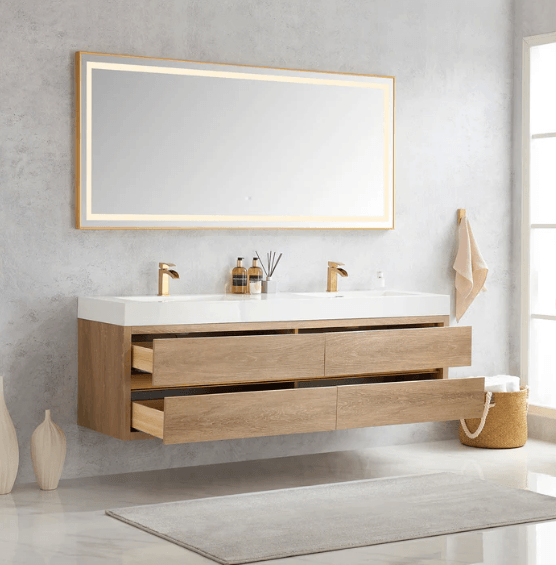
Floating Vanities:
Floating vanities are mounted on the wall with open space underneath.
Advantages:
- makes small bathrooms feel larger
- easier floor cleaning
- modern aesthetic
Step 4: Choose the Best Vanity Materials
Material quality greatly affects durability, moisture resistance, and lifespan. Here is a comparison of common vanity cabinet materials.
| Material | Durability | Moisture Resistance | Cost |
|---|---|---|---|
| Solid wood | Excellent | High | $$$ |
| Plywood | Very good | High | $$ |
| MDF | Moderate | Moderate | $ |
| Particle board | Low | Low | $ |
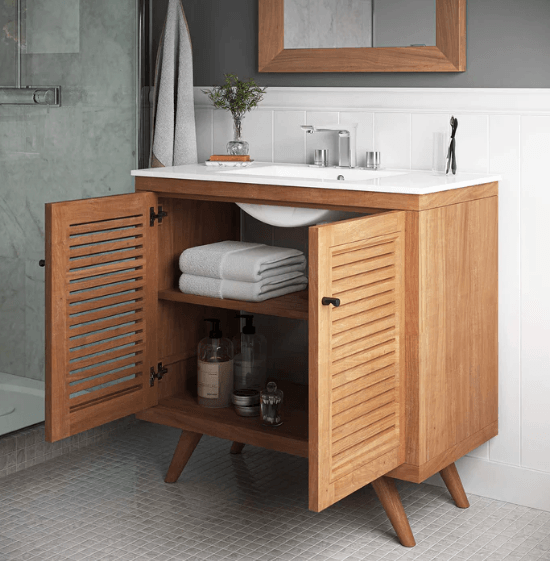
Solid Wood Vanities:
Solid wood cabinets offer the highest durability and long lifespan.
Advantages:
- extremely durable
- high-end appearance
- excellent structural strength
Disadvantages:
- more expensive
- heavier than other materials
MDF and Engineered Wood:
Engineered wood products such as MDF are commonly used in modern vanities.
Advantages:
- lower cost
- smooth painted finish
- lightweight
Disadvantages:
- less resistant to long-term moisture exposure
Step 5: Choose the Right Vanity Style:
Your vanity style should complement the overall design of your bathroom.
Popular vanity styles include:
| Style | Characteristics |
|---|---|
| Modern | Clean lines and minimal hardware |
| Transitional | Mix of modern and traditional |
| Traditional | Decorative details and classic finishes |
| Farmhouse | Rustic wood textures and vintage design |
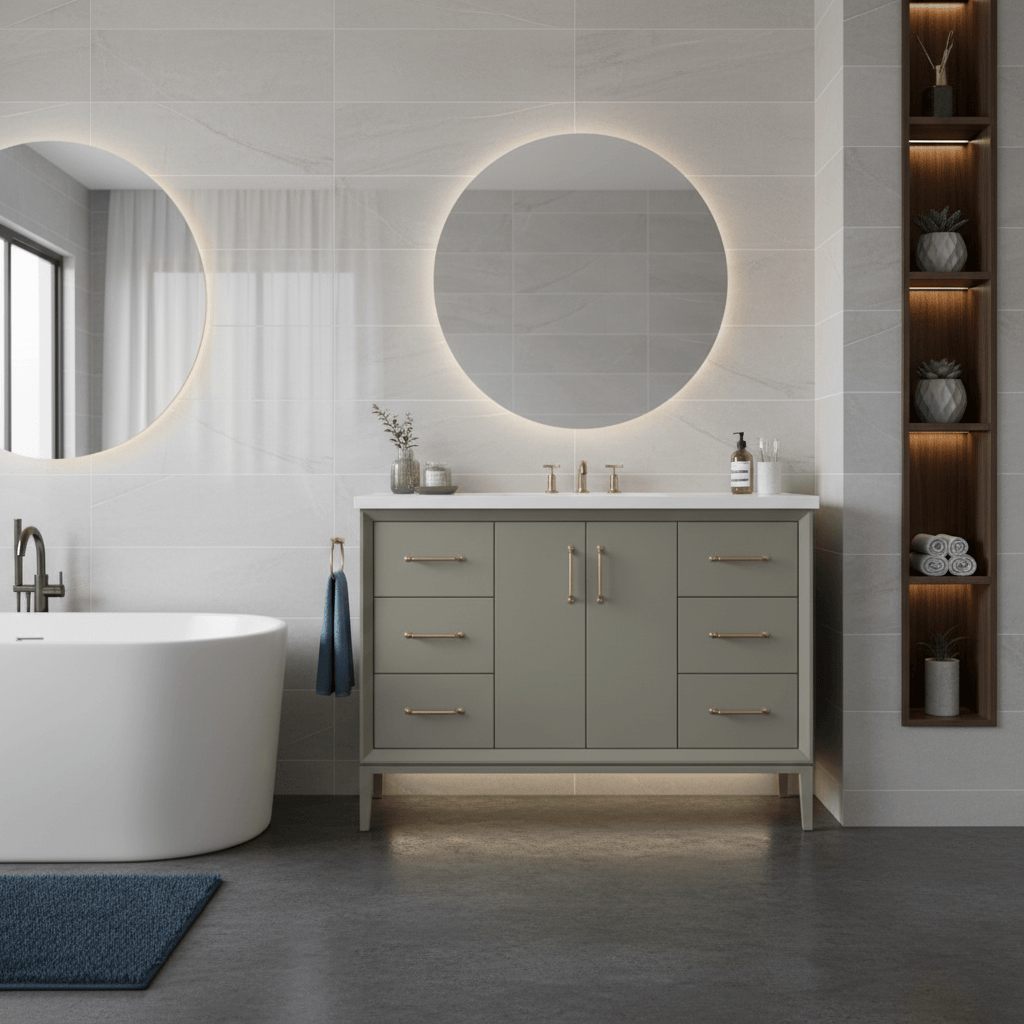
Modern Vanities:
Modern vanities feature sleek finishes and simple designs.
Common features:
- flat panel doors
- matte finishes
- minimal hardware
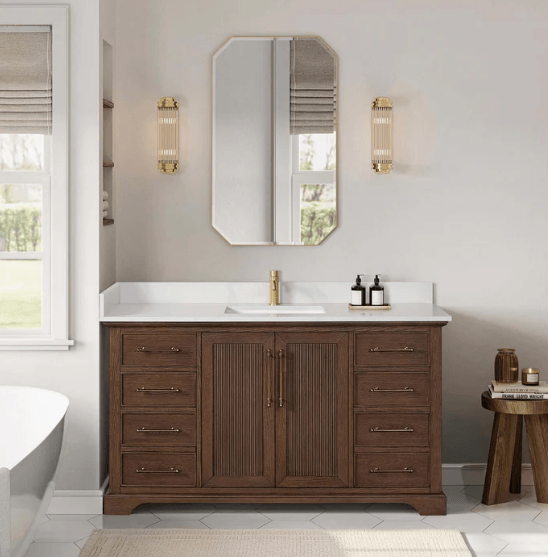
Traditional Vanities:
Traditional vanities often include decorative elements and classic finishes.
Common features:
- raised panel doors
- detailed molding
- antique-style hardware
Bathroom Vanity Price Ranges:
Vanity prices vary depending on size, materials, and construction quality.
| Vanity Type | Average Price |
|---|---|
| Small vanity (24–30″) | $300 – $900 |
| Medium vanity (36–48″) | $700 – $1,800 |
| Double vanity (60–72″) | $1,200 – $3,500 |
Higher-end vanities with solid wood construction and stone countertops typically cost more but offer greater durability.
Bathroom Vanity Maintenance Tips:
Proper maintenance helps extend the life of your vanity.
Keep the cabinet dry
Water damage is the most common cause of vanity deterioration.
Clean countertops regularly
Use non-abrasive cleaners to protect finishes.
Check plumbing connections
Leaks under the sink can damage cabinet materials over time.
Avoid harsh chemical cleaners
Harsh chemicals can damage painted finishes and hardware.
10 Common Bathroom Vanity Mistakes to Avoid:
Avoiding these mistakes can save time and money during your renovation.
- Choosing a vanity that is too large for the space
- Not measuring door and drawer clearance
- Ignoring plumbing locations
- Selecting low-quality materials for humid bathrooms
- Choosing a style that doesn’t match the bathroom design
- Not planning enough storage space
- Buying a vanity without checking installation requirements
- Choosing the wrong sink configuration
- Ignoring countertop durability
- Forgetting about lighting and mirror placement
Recommended Vanity Sizes to Shop:
Once you understand the key factors when choosing a vanity, you can explore sizes that fit your bathroom layout.
Popular options include:
- 24 inch vanities for powder rooms
- 30 inch vanities for compact bathrooms
- 36 inch vanities for guest bathrooms
- 48 inch vanities for family bathrooms
- 60 inch double vanities for master bathrooms
- 72 inch luxury double vanities
Each size offers different storage capacity and design possibilities.
Frequently Asked Questions:
What is the best size vanity for a small bathroom?
Most small bathrooms use 24-inch or 30-inch vanities to maximize space while still providing storage.
Should I choose a floating or freestanding vanity?
Floating vanities work best in modern or small bathrooms, while freestanding vanities offer more storage.
What material is best for bathroom vanities?
Solid wood and plywood offer the best durability and moisture resistance.
How much should I budget for a bathroom vanity?
Most homeowners spend $500 to $2,000 depending on the size and material quality.,
Related Products You May Like:
-
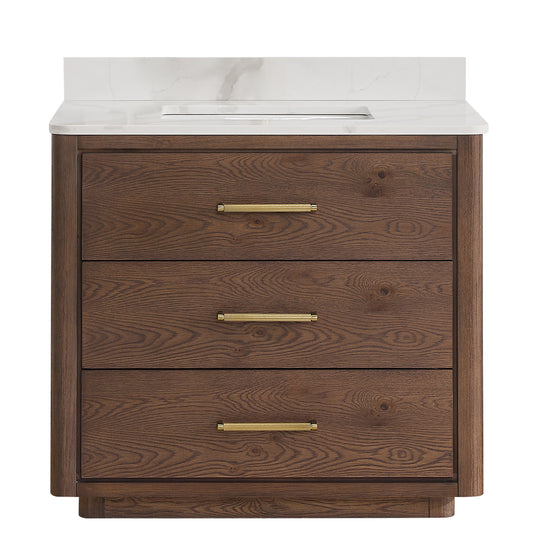
36" Vinnova Porto Freestanding Luxury Bathroom Vanity | Single Sink | Solid Oak Wood | Quartz Stone
Vendor:VinnovaRegular price $1,270.94Sale price $1,270.94 Regular priceUnit price per$2,398.00Sale -
Vinnova, Vera 72" Free-standing Single Bath Vanity in Washed Ash Grey with White Integrated Stone Sink Top
Vendor:VinnovaRegular price $1,711.00Sale price $1,711.00 Regular priceUnit price per$3,798.00Sale -
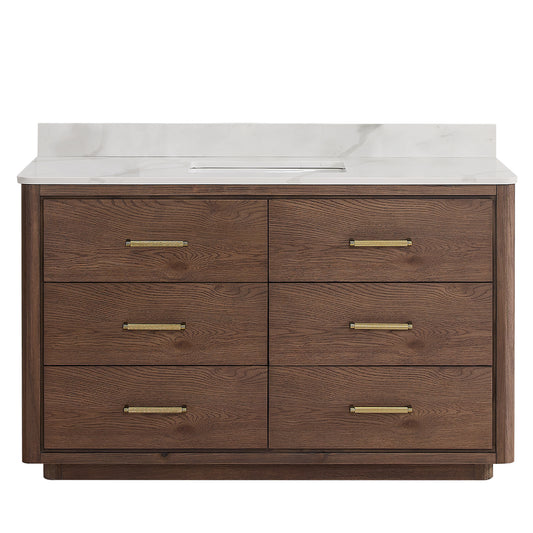
55" Vinnova Porto Freestanding Luxury Bathroom Vanity | Single Sink | Solid Oak Wood | Quartz Stone
Vendor:VinnovaRegular price $1,581.26Sale price $1,581.26 Regular priceUnit price per$3,510.00Sale -
Ayna Decors Rooh 42 Inch White Bath Vanity with Pure White Quartz Countertop
Vendor:Ayna DecorsRegular price $1,099.00Sale price $1,099.00 Regular priceUnit price per$1,369.00Sale


